Toast POS
Toast POS is a restaurant SaaS platform for managing orders and payments. The challenge was simplifying the order process and reducing the mistakes that can happen during busy service.
38% Faster Process
Addresses 75%
of Common Mistakes
My Role
I worked as the sole product designer, researching the existing ordering and payment flows to identify usability issues and common errors. I then redesigned the experience, built a functional prototype using AI-assisted coding, and tested it to see how the changes worked in practice.
Key Design Decisions
Consolidating Repeated Order Type Selection
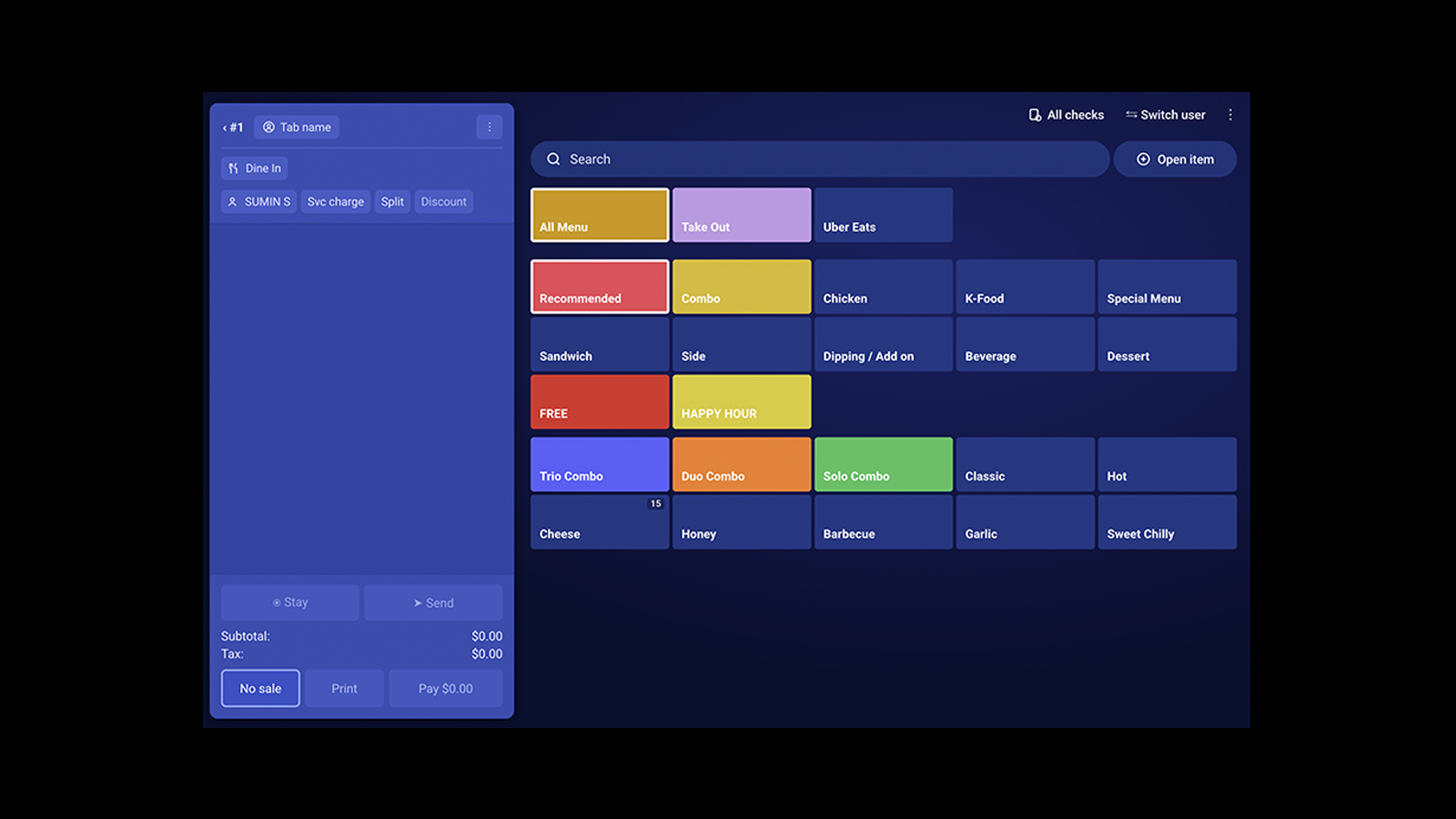
The existing flow required staff to select the order type twice: once on the bill on the right and again when adding menu items on the left. This added unnecessary steps and increased the chance of mistakes.
I consolidated the order type selection into a single step, allowing staff to choose Dine-In, Takeout, or Uber Eats once, with the selected order type automatically applied to the bill. This makes the ordering process faster and simpler.
Clarifying Menu Hierarchy
The existing interface made it difficult to tell the difference between main categories and submenus. It was also unclear which menu level staff were viewing, making it harder to find and select items.
I created a clearer visual hierarchy using color, dividers, and outlined submenu containers. I also organized the quantity and price information within each submenu to make it easier to scan and understand.
Preventing Accidental Order Completion
Selecting Uber Eats immediately completed the payment and removed the bill. This was one of the most common mistakes staff made. If they selected Uber Eats by accident for a Dine-In or Takeout order, the bill could disappear.
I added a confirmation step before completing the payment. This gives staff a chance to check their selection and prevent the bill from being completed by mistake.
Outcome
I tested the original and redesigned flows with 6 restaurant servers. Each person completed 6 ordering tasks, for a total of 36 tests.
The average time to complete an order decreased from 34 seconds to 21 seconds, making the redesigned flow about 38% faster. I also focused on the two most common ordering mistakes from the previous three months, which accounted for 75% of the mistakes recorded at the restaurant. I redesigned the ordering flow to help prevent these mistakes.
I also built an interactive prototype using AI-assisted coding. Give it a try below!